Visiting Canada
Hosting family in Montreal: eTA or visitor visa?
Which guests need a CAN$7 eTA, which need a visa, why arriving by car changes things, and the traps for dual citizens and former residents.
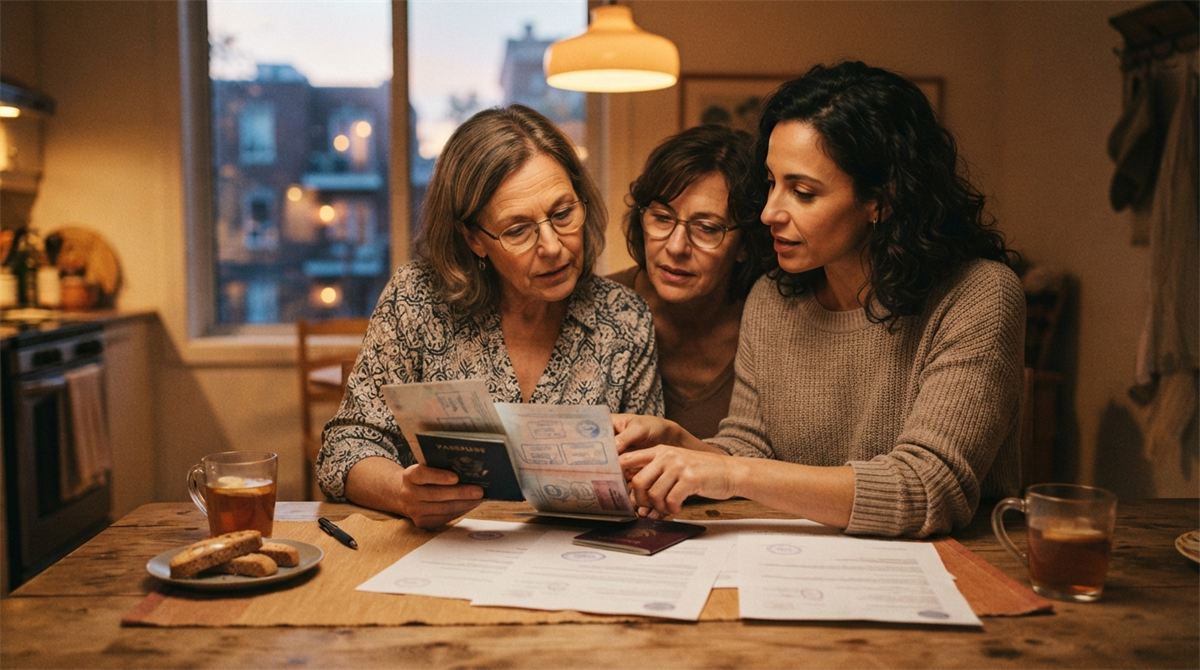
Hosting family in Montreal: eTA or visitor visa? The answer depends on the visitor’s passport, travel route and circumstances, not simply on having relatives in Quebec. Once the right authorization is clear, the host and visitor can coordinate a consistent explanation of the trip. This article is based on IRCC pages checked on October 17, 2026.
Key takeaways
| Question | Quick answer |
|---|---|
| Does every family member need the same travel authorization? | No. Check each visitor’s passport and travel plans using IRCC’s entry-requirements tool. |
| When is an eTA relevant? | Visa-exempt travellers need an eTA to fly to or transit through a Canadian airport. It costs CAN$7. |
| What should the invitation explain? | The relationship, visit purpose, intended dates, accommodation and any specific support the host plans to provide. |
| Does a host submit the visitor’s application? | No. The host can provide supporting information, while the visitor remains responsible for their own application. |
| Is a super visa for every relative? | No. It is a distinct option for eligible parents and grandparents, subject to IRCC’s criteria. |
Start with the visitor’s passport and how they will travel
An eTA (electronic travel authorization) and a visitor visa, also called a temporary resident visa or TRV, are different travel authorizations. A family connection in Montreal does not determine which one a visitor needs; their citizenship, passport, circumstances and route of travel do. Start with IRCC’s tool “Find out what you need to travel to Canada”, for each guest separately.
Visa-exempt foreign nationals need an eTA to fly to or transit through a Canadian airport. Travellers whose nationality requires a visa generally apply for a visitor visa, although some can apply for an eTA instead when flying, if they meet IRCC’s conditions.
| Guest | Flying in | Driving, train, bus or boat |
|---|---|---|
| Citizen of a visa-exempt country | eTA | Passport only |
| Citizen of certain visa-required countries who meets the conditions | eTA instead of a visa | Visitor visa |
| Other visa-required travellers, alien’s passport holders, stateless people | Visitor visa | Visitor visa |
| US citizen | Valid US passport, no eTA | Required ID, no eTA |
| Lawful US permanent resident | Proof of US status and a valid passport, no eTA | Same |
The list changes. Since May 26, 2026, for example, some citizens of Indonesia and Malaysia who meet certain requirements can apply for an eTA instead of a visa to fly to Canada. Always check on the day you plan, using IRCC’s eTA page.
Two situations catch families out. Dual Canadian citizens can’t fly to Canada on a foreign passport with an eTA: they need a valid Canadian passport (Canadian-Americans may use a valid US passport). And former residents should remember that permanent resident status does not expire on its own: someone who lived in Canada long ago may still be a permanent resident and need a PR card or a PR travel document to board.
Getting the eTA right
- Apply only on canada.ca. The official fee is CAN$7, non-refundable, one person per application. Other websites charge more for the same form.
- Enter the passport number exactly as it appears on the photo page, and check it again in the approval email. A wrong number means a new application and possible trouble boarding.
- Most applications are approved within minutes; some take several days if documents are requested. IRCC recommends getting the eTA before booking the flight.
- An eTA is valid up to five years or until the passport expires, whichever comes first. A new passport needs a new eTA.
Did you know?
An eTA is valid for up to 5 years or until the passport expires, whichever comes first.
One family, three answers
Sophie lives in Montreal and invites three relatives for her wedding. Her French uncle flies from Paris: he needs an eTA, applied for on canada.ca. Her cousin, a U.S. citizen, drives up from Vermont with her U.S. passport: no eTA, no visa. Her grandmother, whose citizenship requires a visa and who doesn’t meet the eTA conditions, applies for a visitor visa months ahead, with Sophie’s invitation letter. Same wedding, same host, three different documents, each decided by the traveller’s passport and route, never by the event.

Describe the family visit clearly and consistently
The visitor should state plainly that the purpose of travel is visiting family in Montreal. If the trip also includes sightseeing or other activities, describe them as part of that same visit so the application presents one coherent plan.
Make the proposed trip concrete by aligning the intended dates, where the visitor will stay, their relationship to the host and the general itinerary. The invitation and the visitor’s own information should describe the same arrangements, rather than giving different dates, addresses or explanations for the trip.
A visitor visa applicant must meet the applicable requirements, including showing that the visit is temporary, that they will leave Canada at the end of the authorized stay and that they are admissible. An invitation helps explain the host’s account of the visit, but it does not decide whether the visitor meets the requirements: the visitor’s own purpose, circumstances and application remain central to the assessment.
Write an invitation that answers the host’s part of the story
A useful invitation letter identifies the host and visitor, explains their relationship and sets out why the visitor is coming, when they plan to visit and where they expect to stay. Our guide on the invitation letter for a visitor visa lists what IRCC expects it to contain.
If you are offering accommodation or financial support, spell out what you will provide and for which part of the stay. For example, distinguish between a room in your home and expenses you actually plan to cover, so the letter does not suggest a broader commitment than you intend.
Compare the invitation with the visitor’s account before it is submitted. Differences in dates, purpose, accommodation or who will pay can make an otherwise straightforward family visit harder to understand.
An invitation letter does not replace the visitor’s required eTA or visa application, and it does not establish that the visitor meets every requirement. It is supporting context for the host’s side of the explanation.
Separate the host’s information from the visitor’s evidence
The host can explain the relationship, offer details about accommodation and describe any support they plan to provide. The visitor remains responsible for their own application and supporting information, following the instructions for the authorization they need.
A visitor visa application needs a reason for the trip, a financial plan and evidence of the visitor’s situation outside Canada, and often biometrics. The appropriate documents vary by applicant, so use IRCC’s instructions and select evidence that supports the account given in the application. Our list of visitor visa documents can help.
Previous Canadian study, work or immigration history should be reported accurately and consistently. For example, a former student should make sure their explanation aligns with their records and any prior study permit, CAQ for studies or post-graduation work permit.
A short shared checklist catches mismatches before submission:
- Host: invitation, relationship context, accommodation and any support offered.
- Visitor: application, travel purpose, financial plan and relevant supporting documents.
- Both: consistent names, dates, address and explanation of the trip.
Accommodation or financial support can clarify how the visit is arranged, but neither guarantees an approval or admission to Canada.

Apply for the authorization that fits the visitor’s situation
Once the visitor identifies the right route, they should follow the instructions for that authorization. An eTA application is made online, while a visitor visa follows its own application process; current instructions and fees appear on IRCC’s visitor visa page.
The visitor should use the same passport throughout the process and keep the trip details consistent with the invitation and supporting documents.
Our visitor visa page describes how we help visitors and hosts organize a consistent account of the stay, the available resources and the reasons the visitor will return home. A host may help gather or review information, but the visitor still manages their own application.
If an application is refused, the visitor should read the decision and understand the stated concerns before deciding what to do next. See our guide on reading an officer’s decision notes and our page on visa refusals. An eTA isn’t a way around a visa requirement or a past refusal: the eTA form asks about past refusals.
What an eTA or a visa doesn’t do
Neither guarantees entry: the border officer decides. Neither allows work or study. Visits are usually up to six months at a time; a guest who wants to stay longer applies for a visitor record before their status ends. If your guest is a minor travelling without both parents, IRCC suggests carrying a consent letter and, depending on the case, custody documents.
Check whether the visit fits a special family category
A visit by a sibling, cousin, aunt, uncle or other relative normally follows the visitor’s applicable eTA or visitor visa route. The relationship alone does not create a separate travel authorization; parents and grandparents may have another option if they meet the super visa criteria.
A super visa is for eligible parents and grandparents of Canadian citizens, permanent residents or registered Indians. The host, the visitor, the medical insurance and the application must meet IRCC’s current conditions; see the official super visa requirements and our super visa checklist for hosts.
If a relative’s actual plans involve work or study instead of a temporary family visit, they should explore the relevant authorization before travelling: see our pages on work permits and the study permit. Someone considering a permanent move needs a different pathway, such as permanent residence or family sponsorship.
Planning a family visit and unsure what each guest needs? You can describe the situation or book a consultation.
Frequently asked questions
Can someone with a Canadian visitor visa work in Canada?
No. A visitor visa does not itself authorize employment. Most foreign nationals need a work permit to work, subject to specific exceptions.
Can I invite my brother to visit me in Montreal?
Yes, you can write an invitation explaining your relationship and the visit. If his spouse or children travel with him, each person checks the requirements for their own passport.
Do they need to print the eTA?
No. It’s linked electronically to the passport; the airline scans the passport at check-in.
Does a domestic flight within Canada need an eTA?
No. IRCC says you don’t need an eTA to travel within Canada.
Does an invitation letter from a Montreal host ensure entry to Canada?
No. It supports the explanation of the visit, but the visitor must hold the required travel authorization and meet the entry requirements; the border officer decides.
Conclusion
Hosting family in Montreal: eTA or visitor visa? Begin with the visitor’s passport and travel route, then coordinate a clear account of the visit, accommodation and support arrangements. An invitation can explain the host’s role, while the visitor remains responsible for choosing and applying for the correct authorization.
Official sources
Official pages consulted on October 17, 2026:
More in this series
- Canada visitor visa documents: build a clear, consistent application
- Biometrics for a Canadian application: who needs them, what they cost, how long they last
- Canada tourist visa: check what you need and prepare your application
- How long can you stay in Canada with a visitor visa?
- Writing an invitation letter for a Canadian visitor visa: what to include, with a template
- Super visa for your parents: a checklist for the host in Canada
About this guide
Written for Visa Canada Rouge, a Montreal immigration consultancy led by Moadh Rahmaoui, Regulated Canadian Immigration Consultant (RCIC-IRB, licence R534941, listed on the public register of the College of Immigration and Citizenship Consultants).
This guide is general information, not legal advice. Immigration requirements, fees and processing times change often: check them on the official websites (canada.ca, quebec.ca) when you apply. No outcome can be guaranteed.
Every file is different.
This guide covers the general rules. To find out what applies to you, talk to a regulated consultant.