Visiting Canada
Super visa for your parents: a checklist for the host in Canada
Status, minimum income and invitation letter for the host; insurance and medical exam for the parents: what a super visa application needs, side by side.
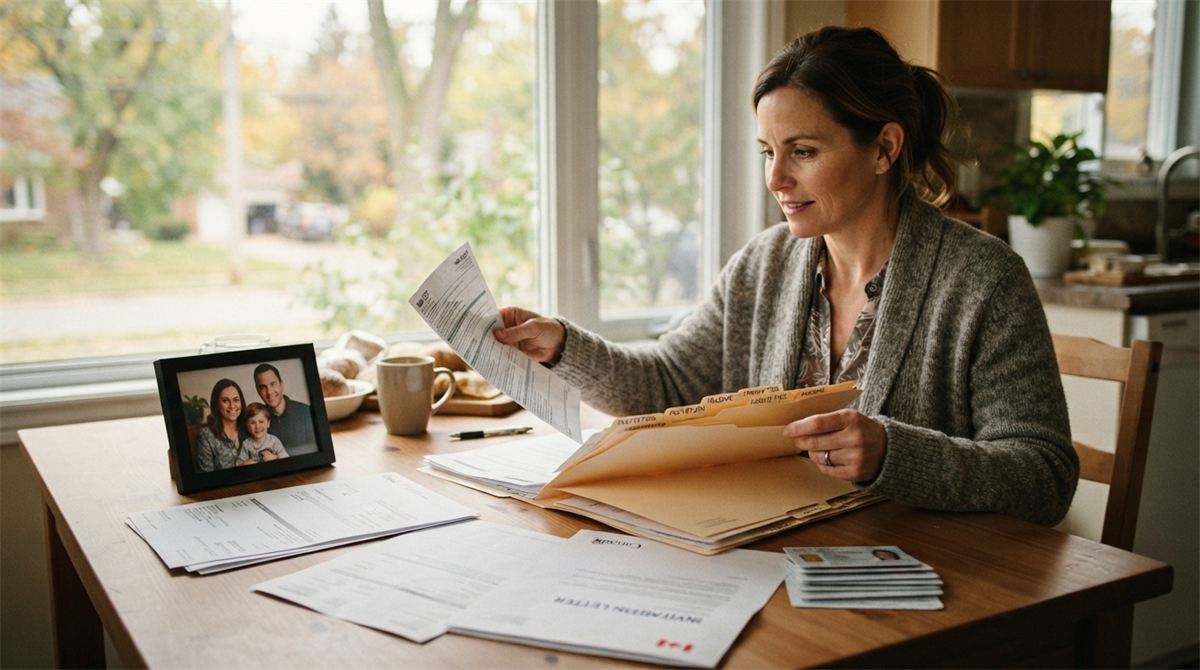
Super visa for your parents: a checklist for the host in Canada. When parents apply for a super visa, much of the file actually rests on their child or grandchild in Canada: the host’s status, income and invitation letter are part of the requirements. This checklist separates the evidence you prepare from the forms and documents your parent or grandparent must provide, so the whole package stays consistent. It is based on IRCC pages checked on October 17, 2026.
Key takeaways
- Check host eligibility first. You must be the applicant’s child or grandchild, a citizen, permanent resident or registered Indian, 18 or older, living in Canada.
- Build one consistent family count. It decides the minimum income you must show.
- Keep income evidence clear, especially after a job change or if you are self-employed.
- Make the invitation specific, including a promise of financial support.
- Divide the tasks: you prepare status, relationship, income and invitation; your parent prepares forms, passport, insurance and medical exam.
- Review the whole file before submission.
First, is the super visa the right choice?
The super visa lets parents and grandparents visit for up to five years at a time, with multiple entries for up to ten years. If your parents plan to stay six months or less, IRCC’s guidance is to apply for a regular visitor visa instead. The super visa makes sense for long or repeated stays. A visa’s validity is not the length of a stay, and the border officer still decides on entry and its conditions.
The host’s checklist
As the host, you must:
- be the applicant’s child or grandchild, biological or adopted;
- be a Canadian citizen, a permanent resident or a registered Indian;
- be at least 18 and live in Canada;
- meet the minimum necessary income for the size of your family unit;
- write and sign a letter of invitation.
Keep the proof of your status separate from the invitation letter, so each part of the package is easy to find, and assign tasks early so each person knows what to prepare. If your spouse co-signs, their income documents belong in your part of the file too.

Work out family size and document qualifying income
The income requirement trips up many families. Start with the family-size definition on IRCC’s host financial support page: count the people it specifies, including the relatives in the application, and use the same count in the invitation and the financial documents. IRCC’s table, updated July 29, 2025:
| Family size | Minimum income (CAD) |
|---|---|
| 1 | $30,526 |
| 2 | $38,002 |
| 3 | $46,720 |
| 4 | $56,724 |
| 5 | $64,336 |
| 6 | $72,560 |
| 7 | $80,784 |
| Each additional person | $8,224 |
IRCC gives two ways to show it:
- Tax returns: your total income, with a co-signer’s if applicable, meets or exceeds the minimum in either of the 2 tax years before the application, with your notice of assessment from the CRA;
- 75% option: your income in the year before the application is at least 75% of the minimum, and the applicant can add their own income to cover the rest, if needed.
IRCC announced a change to how family income is calculated for the super visa from March 31, 2026; see its notice, and use the rules in force on the day the application is submitted. Don’t assume any relative can co-sign: follow the current rules.
Group tax-year records separately from current pay, and if your income varies, you are self-employed or you changed jobs, add a short note explaining any difference. A bank balance shows funds at one moment; it does not by itself prove the income test.
Who counts, and a worked example
IRCC’s count includes: the super visa applicants you will support (for example both parents), you, your spouse or common-law partner (a separated spouse may count), the dependent children of you and your spouse, whatever the custody arrangements, people holding a super visa under another invitation you or your spouse signed that still applies, and anyone you sponsored or co-signed for whose undertaking is still in effect.
Example: Amine lives in Laval with his wife and their two children, and invites both of his parents. Family size: 2 parents + Amine + his wife + 2 children = 6. Under the table updated July 29, 2025, the minimum is $72,560. With option 1, Amine and his wife (as co-signer) show a combined income of at least that amount in either of the two tax years before the application, with their CRA notices of assessment. With option 2, they show at least 75% of it, $54,420, for the year before the application, and his parents can add their own income to cover the rest.
If Amine had sponsored his brother three years ago and the undertaking were still in effect, the family size would be 7, and the minimum $80,784. Forgetting a person in the count is the most common way a host’s income looks sufficient on paper and isn’t.
Did you know?
A host can show income of at least 75% of the minimum in the year before the application, and the applicant can add their own income to cover the rest.
Write an invitation letter that explains the visit and support
Your letter of invitation should be specific: who you are to the applicant, why they are visiting, where they will stay, how long, and who covers which expenses. For a super visa, it must also include a promise of financial support during the stay and the list and number of people counted in your family size. Keep its family size and income figures aligned with your documents, especially when you invite more than one relative. Our guide on the invitation letter includes a template.

Prove the relationship and your status
Include official records that connect you to the parent or grandparent, such as birth certificates. For a grandparent, include the records that link you to your parent and your parent to the grandparent. If an adoption, a name change or a gap in civil records makes the link less obvious, arrange the records in order with a short explanation. Compare names and dates across all documents, and provide translations where IRCC requires them.
Your parents’ checklist
- Apply from outside Canada.
- Private medical insurance from a Canadian insurer, or a foreign insurer authorized by OSFI and on its list, valid for at least one year from the date of entry, with at least $100,000 of emergency coverage. It must be paid in full or by instalments with a deposit; quotes aren’t accepted. Read the exclusions, especially for pre-existing conditions.
- An immigration medical exam; see our guide on the medical exam.
- Proof of the family relationship, such as birth certificates.
- The general visitor requirements: a genuine visit, ties to their home country, and their family and financial situation.
Each parent applies separately: dependants cannot be included in a super visa application.
| Host prepares | Applicant prepares |
|---|---|
| Proof of Canadian status | Passport and application forms |
| Family size and income evidence | Their own supporting evidence |
| Invitation letter and proof of relationship | Medical insurance |
| Explanation of accommodation and support | Medical exam |
Did you know?
Super visa medical insurance must provide at least $100,000 of emergency coverage and be valid for at least 1 year from the date of entry.
Source: IRCC, Super visa documents
Filling in the application for your parents
Many hosts prepare everything online for their parents. That is fine, as long as the parent stays the applicant: the answers must reflect their situation, they should read the forms before submission, and if you act as their official representative, the right authorization form must be included. Check which travel document applies to their citizenship; parents from visa-exempt countries may still apply for a super visa, but usually need an eTA to fly to Canada; see eTA or visitor visa.
Review the full package, and mistakes we see often
Before submission, compare every name, date, relationship detail, family count, income figure and support arrangement, check that every scan is complete and readable, and keep a copy. After submission, your parent watches for biometrics instructions, document requests and the decision.
- Income documents that do not match the family unit declared.
- A vague invitation letter that does not say who pays for what.
- Insurance bought before reading the exclusions, or with dates that do not match the trip.
- Confusing the ten-year validity with a ten-year stay.
- Resubmitting an identical file after a refusal instead of addressing the reasons given.
Our visitor visa and super visa page explains how we help families, and our guide to visitor visa documents covers the shorter-stay option. You can also describe your situation or book a consultation.

Frequently asked questions
How much does a super visa cost?
IRCC lists fees starting at $100. Biometrics, the medical exam and insurance are additional costs. Check the official fee page when you apply.
Can both parents apply together?
They can prepare their applications together, but each parent submits their own application and is assessed individually.
We also applied to sponsor my parents. Can they still get a super visa?
The two are separate processes. Declare the sponsorship application accurately and explain how your parents will respect the conditions of a temporary stay.
Do I need to show a particular bank balance?
No. The test is your income against the family-size table. Statements can help explain your finances, but they don’t replace the income evidence.
Can my parent apply from inside Canada?
IRCC asks applicants to apply from outside Canada. A parent already here follows the rules for their current status; a visitor extension is not a super visa.
How long does a super visa take?
It depends on the country where your parent applies and changes over time. Use IRCC’s processing-times tool for the current estimate, and don’t book flights or buy non-refundable insurance on the basis of an estimate.
I changed jobs after writing the invitation. What now?
The file should reflect your situation when it is submitted. If the new job changes your income evidence or support details, write a dated replacement letter and update the related documents rather than leaving the old description unexplained.
My parent’s name is spelled differently on older documents. Is that a problem?
Explain it. Add a name-change record or registry extract where one exists, with the required translations; for spelling or transliteration differences, a short list of each version and the document where it appears makes the link clear.
Conclusion
A strong super visa file keeps the host’s evidence separate from the applicant’s documents and makes the family size, income, relationship and support arrangements easy to follow. Use the IRCC rules in force on the submission date, check the package for consistency, and let your parent follow the official updates after filing.
Official sources
Official pages consulted on October 17, 2026:
More in this series
- Canada visitor visa documents: build a clear, consistent application
- Biometrics for a Canadian application: who needs them, what they cost, how long they last
- Canada tourist visa: check what you need and prepare your application
- Hosting family in Montreal: eTA or visitor visa?
- How long can you stay in Canada with a visitor visa?
- Writing an invitation letter for a Canadian visitor visa: what to include, with a template
About this guide
Written for Visa Canada Rouge, a Montreal immigration consultancy led by Moadh Rahmaoui, Regulated Canadian Immigration Consultant (RCIC-IRB, licence R534941, listed on the public register of the College of Immigration and Citizenship Consultants).
This guide is general information, not legal advice. Immigration requirements, fees and processing times change often: check them on the official websites (canada.ca, quebec.ca) when you apply. No outcome can be guaranteed.
Every file is different.
This guide covers the general rules. To find out what applies to you, talk to a regulated consultant.