Visiting Canada
How long can you stay in Canada with a visitor visa?
Usually up to 6 months, set at the border: visa validity vs authorized stay, how to count your date, the super visa and extending 30 days ahead.
How long can you stay in Canada with a visitor visa? For most visitors, up to 6 months from the day they enter, unless the border officer decides otherwise. The date printed on the visa is not your departure date: it only tells you until when the visa can be used to travel to Canada. This guide explains the difference, how to work out the date you must leave, and what to do if you, or the parents you are hosting, need more time. It is based on IRCC’s pages consulted on October 25, 2026.
Key takeaways
- A visitor visa can be valid for up to 10 years, or until the passport or biometrics expire, whichever comes first. That is the period during which it can be used to travel, not the length of a stay.
- The length of each stay is decided at the border. Most visitors can stay up to 6 months; the officer can allow less or more.
- With no stamp and no document, you can stay until the earliest of: 6 months after entry, your passport’s expiry, or your biometrics’ expiry.
- Super visa holders who entered after June 22, 2023 can stay up to 5 years at a time.
- To stay longer, IRCC asks visitors to apply to extend their stay at least 30 days before their authorized stay ends.
Three dates that are easy to confuse
Families who host relatives in Canada often look at the visa sticker in the passport and read the expiry date as the date their guest must leave. That is the most common misunderstanding we see. There are actually three separate things to keep apart.
The visa’s validity. A visitor visa (also called a temporary resident visa) is the document IRCC places in a passport to show that the person meets the requirements to travel to Canada. According to IRCC, a visa is generally valid for up to 10 years, or until the passport or biometrics expire, whichever comes first. The visa officer decides how long it will be valid.
The number of entries. The visa officer also decides, at their discretion, whether to issue a single-entry or a multiple-entry visa. A multiple-entry visa lets the holder travel to Canada several times while it is valid; it does not guarantee entry on any of those trips.
The authorized stay. This is the period the border services officer grants when the visitor actually arrives. It starts on the day of entry and is the date that counts for leaving.
Put simply: the visa answers “until when can I come?”, the entry decision answers “how long can I stay this time?”.
Who decides how long you can stay
The decision belongs to the border services officer at the port of entry. IRCC states that having a valid visa and travel document does not guarantee entry. At arrival, your identity is checked, and the officer must be satisfied that you have the right to enter and that you will leave at the end of your authorized stay.
Most visitors can stay up to 6 months. Depending on the purpose of the visit, the officer can shorten or extend that maximum. When they do, they either stamp the passport with the date you must leave or give you a document called a visitor record that shows the date.
Each entry is a new decision. A grandmother who was given 6 months last year might be given a different period this year, depending on what she tells the officer, the documents she carries and her travel history.
Working out your departure date
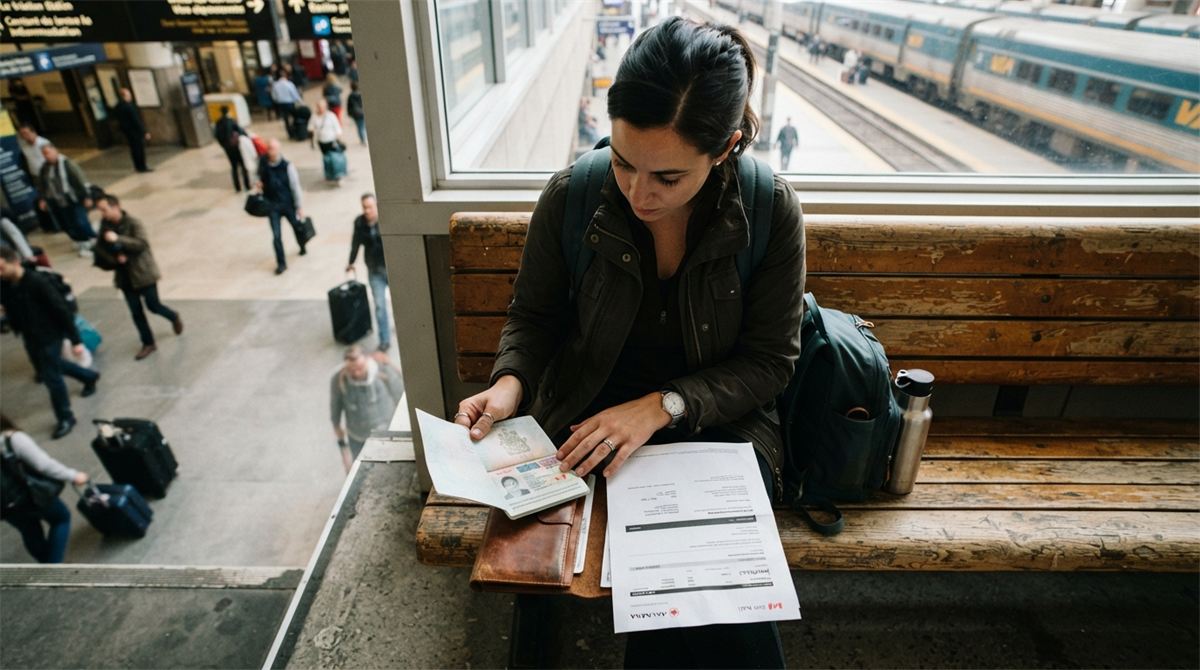
Start with what you received at the border.
- A visitor record or a stamp with a date: that date is your deadline.
- A stamp without a specific date, or no stamp at all: you can stay until the earliest of 6 months from your date of entry, the expiry of your passport, or the expiry of your biometrics.
That third point surprises people. If a visitor’s passport expires 3 months after arrival, their authorized stay ends then, not 6 months later. The same goes for biometrics, which have their own validity period.
Many visitors arriving at Canada’s main airports go through primary inspection kiosks and may not get a stamp. IRCC notes that if you need proof of your date of entry, for example as a super visa holder, you can ask the border services officer to stamp your passport after using the kiosk. Even without a stamp, keep your boarding pass or e-ticket: it is an easy way to show when you arrived.
A simple routine helps hosts and guests alike:
- Write down the date of entry on the day of arrival.
- Note any date written on a stamp or visitor record.
- Check the passport and biometrics expiry dates.
- Take the earliest relevant date as the deadline and put a reminder about 6 weeks before it.
If the visa expires during the stay
A visa that expires while the visitor is in Canada does not cut the stay short. The visitor can remain until the end of the authorized stay granted at entry. What changes is the next trip: once the visa has expired, the person will need a new one to come back after leaving Canada (unless they become eligible for an eTA instead).
The reverse is also true. A visa valid for another 8 years does not allow anyone to stay longer than the period granted at each entry.
The super visa: longer stays for parents and grandparents
The super visa is designed for parents and grandparents of Canadian citizens, permanent residents and Registered Indians. According to IRCC, it allows visits of up to 5 years at a time and multiple entries for up to 10 years. Super visa holders who arrived after June 22, 2023 can stay up to 5 years.
The same logic applies, though: the length actually granted is what the officer decides at entry. Keep the stamp or visitor record, and ask for a stamp at the kiosk airports if you need proof of the entry date. Our guide on choosing between a super visa and a regular visitor visa for parents compares the two.
Visitor visa, eTA and visitor record: who needs what
Not every visitor needs a visa. Travellers from visa-exempt countries who fly to Canada need an electronic travel authorization (eTA) instead. The rule for the length of stay is the same: it is decided at entry. Our article on eTA or visitor visa explains which document applies to whom.
A visitor record is something else again. It is not a travel document: it is the document that sets or extends the date a visitor must leave, either issued at the border or obtained by applying from inside Canada.

Staying longer: applying for a visitor record
If your guest wants to stay past the end of their authorized stay, they must apply to extend it, which means applying for a visitor record. IRCC asks visitors to apply at least 30 days before their authorized stay ends.
The application is made online. A strong extension request usually explains:
- why the visitor wants to stay longer (a birth in the family, medical care, a family event);
- until when, with a clear end date;
- how the extra time will be paid for, with recent proof of funds from the visitor or the host;
- where the visitor will live;
- why the stay remains temporary, such as a return ticket, a job, property or family to go back to.
Include clear copies of the passport pages with the photo, the visa and any stamps, and proof of the current status.
If the application is submitted before the authorized stay expires, the visitor can generally stay in Canada while it is processed, under the same conditions. This is known as maintained status. Our guide to the visitor record goes through the application in more detail.
What a visitor cannot do
Visitor status is for visiting. It does not allow someone to work for a Canadian employer, and studies longer than short courses generally require a study permit. Unpaid activities can also count as work depending on what they involve, so a visitor who plans to “help out” at a family business should check first.
If the plan changes during the stay, for example a job offer or a decision to study, look at the right route before acting: our pages on the work permit and the study permit are a starting point.
If the deadline has passed
A visitor who stayed past their authorized date without applying for an extension has lost their status. An ordinary extension application is no longer the right tool. Depending on the timing, they may be able to apply to restore their status, which has its own deadline and fee. In the meantime, they must not work or study.
An overstay can also weigh on future applications, for the visitor and sometimes in the way an officer reads an invitation from the same host. It is worth dealing with quickly and carefully.
For hosts: a short checklist before the visit
- Agree on realistic dates and buy a return ticket that matches them.
- Give your guest an invitation letter that states the purpose and length of the visit; officers may ask to see it at the border.
- Make sure the passport will remain valid for the whole stay.
- Keep proof of the entry date and any visitor record.
- Set a reminder well before the 30-day mark if an extension might be needed.
If the situation is not straightforward, such as a previous overstay, a refusal or a health issue during the visit, our visitor visa service, a consultation or our assessment form can help you sort out the options.
Frequently asked questions
Is the 6-month limit per year or per visit?
It is per entry. The authorized stay starts each time the visitor enters Canada, and the officer decides its length. Frequent long visits can, however, lead an officer to ask more questions about ties to the home country.
My visitor visa is valid for 10 years. Can I stay for 10 years?
No. The 10 years is how long the visa can be used to travel to Canada. Each stay is limited to the period granted at entry, usually up to 6 months.
Can I leave Canada for a few days and come back to restart the 6 months?
Each entry is a new decision by the border officer, who can grant a shorter period or refuse entry. Short trips out of Canada are not a reliable way to extend a stay, and repeated attempts can raise doubts about the purpose of the visit.
What if the officer gave me less than 6 months?
The date the officer set is the one to respect. If you need more time, apply for a visitor record at least 30 days before that date.
Can I apply for an extension after my stay has expired?
Not as a regular extension. Once the authorized stay has ended, the option to look at is restoration of status, which has its own conditions and deadline.
In short
The visa tells you until when you can travel to Canada; the border officer tells you how long you can stay each time. Without a stamp or document, count 6 months from entry, or less if the passport or biometrics expire sooner, and apply to extend at least 30 days before the end if you need more time.
Official sources
Official pages consulted on October 25, 2026:
- IRCC — Visitor visa: who needs one and how long you can stay
- IRCC — Prepare for your arrival
- IRCC — Extend your stay in Canada (visitor record)
- IRCC — Super visa for parents and grandparents
More in this series
- Canada visitor visa documents: build a clear, consistent application
- Biometrics for a Canadian application: who needs them, what they cost, how long they last
- Canada tourist visa: check what you need and prepare your application
- Hosting family in Montreal: eTA or visitor visa?
- Writing an invitation letter for a Canadian visitor visa: what to include, with a template
- Super visa for your parents: a checklist for the host in Canada
About this guide
Written for Visa Canada Rouge, a Montreal immigration consultancy led by Moadh Rahmaoui, Regulated Canadian Immigration Consultant (RCIC-IRB, licence R534941, listed on the public register of the College of Immigration and Citizenship Consultants).
This guide is general information, not legal advice. Immigration requirements, fees and processing times change often: check them on the official websites (canada.ca, quebec.ca) when you apply. No outcome can be guaranteed.
Every file is different.
This guide covers the general rules. To find out what applies to you, talk to a regulated consultant.