Permanent residence
PR card renewal and the residency obligation: what permanent residents should check
Your card expires, your status does not. The 730-day rule, when and how to renew (9 months, $50, in Canada), and why you should renew before you travel.
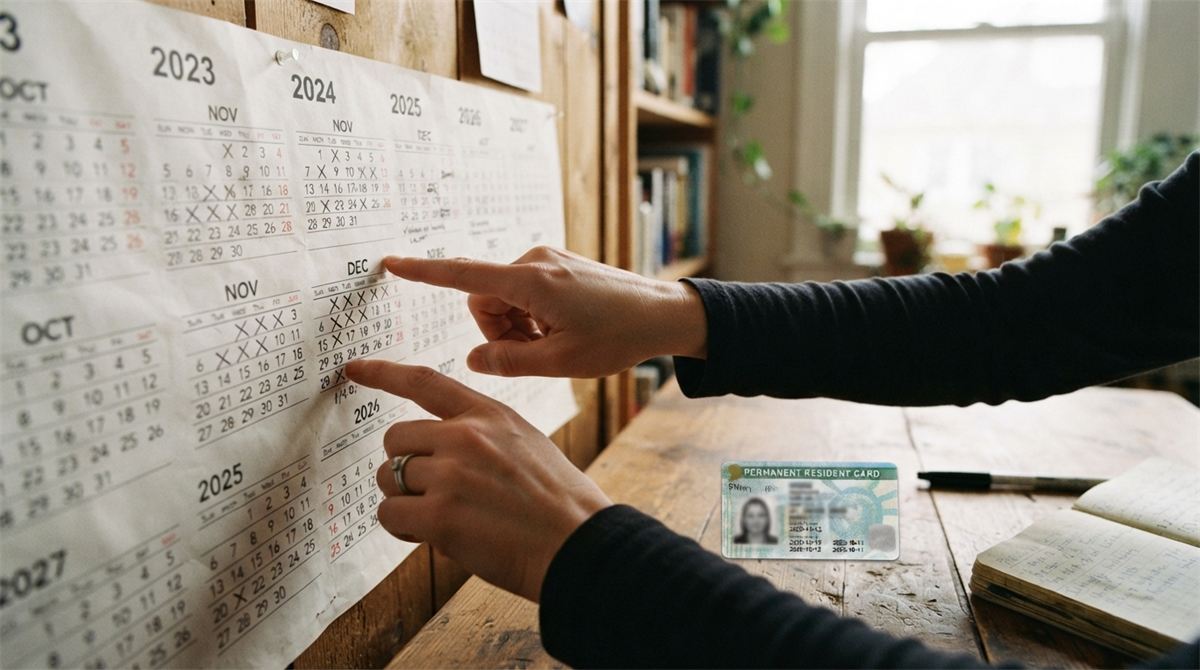
PR card renewal and the residency obligation begin with a clear travel timeline, not just the expiry date on a card. Your permanent resident card has an expiry date; your permanent resident status does not. Before applying, confirm which five-year period applies, count days in Canada, and identify any time abroad that may qualify under IRCC’s rules. Here is what IRCC says, from pages checked on October 11, 2026.
Key takeaways
- Check the day count: IRCC says permanent residents need at least 730 days in Canada during the last five years to keep status; the days do not have to be continuous. Some time abroad may count, but only in qualifying circumstances.
- Use the right five-year period: Identify the relevant period before assessing your days.
- Reconcile your travel history: Build a trip-by-trip timeline and investigate gaps before submitting a renewal application.
- Separate kinds of evidence: Records of your presence in Canada are different from proof that a particular absence qualifies.
- Keep the card and day count separate: Review the card expiry date and your residency-obligation day count as separate questions.
- If abroad, plan ahead: You need a valid card, or a permanent resident travel document, to board a commercial flight home.
Card and status are not the same thing
IRCC is explicit: when your PR card expires, you still have your PR status and can stay in Canada. You may still need a valid card for some provincial services. Status is lost only in specific cases: an official decision after an inquiry or an appeal, renouncing it voluntarily, a removal order coming into force, or becoming a Canadian citizen. If you do not meet the residency obligation, you remain a permanent resident until an official decision is made on your status.
Which five-year period should you count?
If you have been a permanent resident for at least five years, assess the five years immediately before the date you apply. In that period, you need to show at least 730 qualifying days, which can include physical presence in Canada and certain qualifying time abroad.
If you became a permanent resident less than five years ago, count from your PR date to the end of your first five years. You must be able to reach 730 qualifying days within that period, counting days already completed and checking whether the time remaining can make up the balance.
A Quebec address or provincial records can help document your life in Canada, but they do not replace a complete count of qualifying days.
How to build a reliable travel timeline
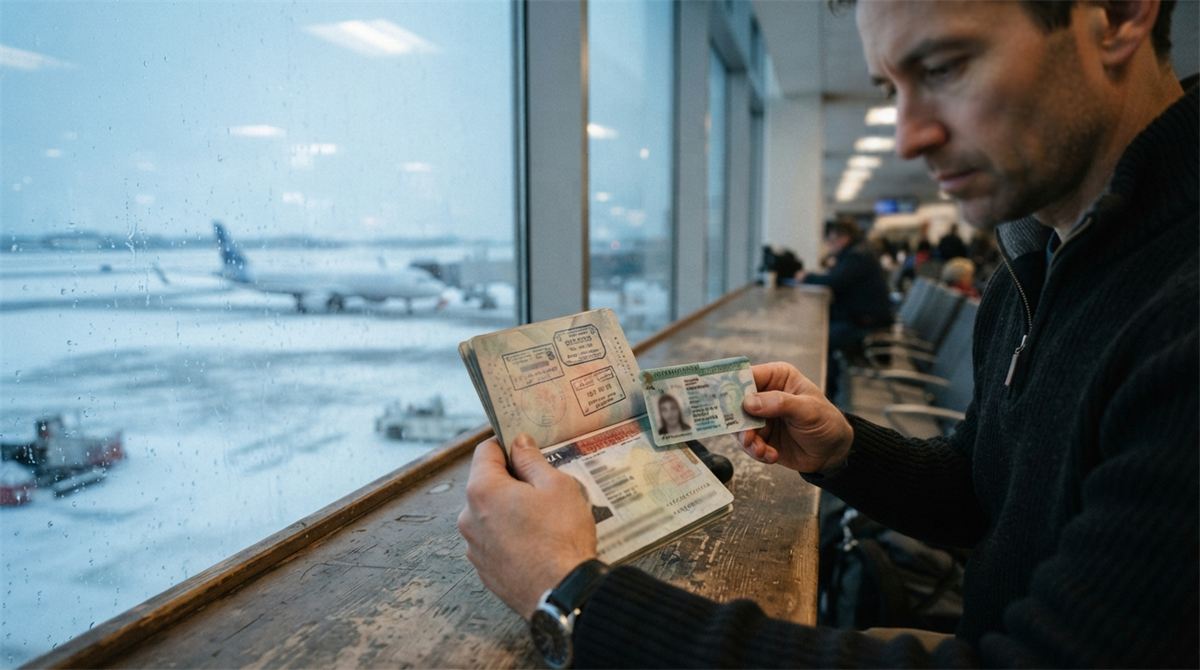
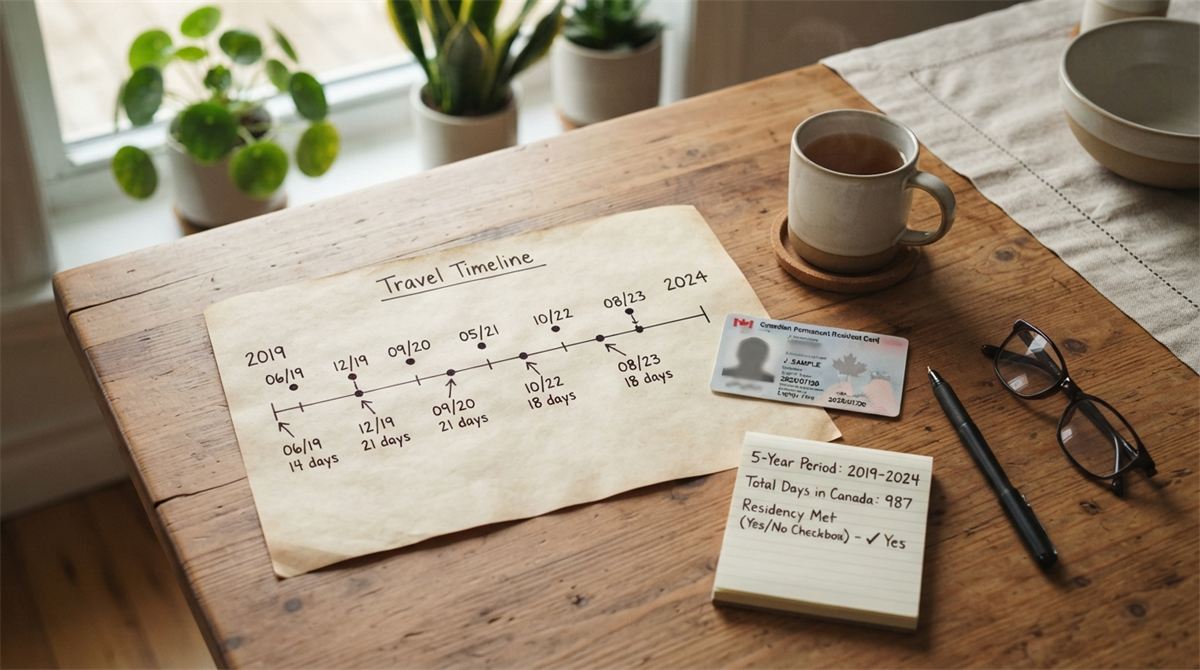
Start with a chronological list of every trip outside Canada during the relevant period. Record the departure date, return date, destination, and the document or record that supports each date.
Compare passport stamps with flight or bus itineraries, boarding passes, travel confirmations, credit-card statements, work schedules, and appointment records. If dates conflict, note the discrepancy and look for a record created at the time of travel rather than guessing.
For missing passport stamps, other records can help establish when you travelled and when you returned. Keep copies of relevant passports and travel documents, and use the IRCC residency obligation calculator to organize your assessment; the application guide explains which supporting documents to submit.
Do not count a day abroad as physical presence in Canada. Instead, identify it separately and assess whether the facts meet one of IRCC’s categories for qualifying time abroad.
Which time abroad may count?
Time abroad counts only when your circumstances fit an IRCC category; living abroad or working for a foreign employer does not qualify by itself. IRCC says some time abroad may count toward the 730 days in certain situations, so review its rules for time spent outside Canada before relying on any period.
Keep evidence for the particular category you rely on, organized by trip and by the reason you believe a period abroad may count.
What to check before submitting a renewal
When to renew
You can renew once your card will expire in less than 9 months, or has expired. The fee is $50.
You must be in Canada: IRCC does not mail PR cards outside Canada. Source: IRCC, Get, renew or replace a PR card
- How: online, through the Permanent Residence Portal (form IMM 5444). The fee is paid separately, then you upload the receipt.
- Urgent processing: available in some circumstances, with a minimum of 3 weeks and no guarantee.
- Validity: a card is usually valid for 5 years, and in some cases for only 1 year.
Use the official guide to applying for a permanent resident card and its document checklist. Check that the application is complete, that dates agree across forms and records, and that you include the identity and travel documents the checklist requests.
Do not rely on a general proof of address by itself. A lease, utility bill, or tax record may support your residence history, but it does not independently establish how many days you were physically present in Canada. Match your supporting records to the dates in your travel timeline.
If your day count appears insufficient
Before applying, recalculate the relevant period and review each day you plan to count. Correct errors, obtain missing records where possible, and distinguish days you can substantiate from days that remain uncertain.
If a corrected count still falls short, check whether any days qualify under a specific category and gather evidence; do not fill gaps with estimated dates. If the shortfall appears real, get case-specific advice before deciding whether and when to apply from inside Canada or, if abroad, seek a permanent resident travel document. A negative residency-obligation decision can lead to loss of PR status. An appeal may be available depending on the circumstances; read the decision notice promptly for the appeal route and deadline.
Where dates, qualifying absences, or a possible shortfall make the assessment difficult, you can discuss the facts and possible next steps through our immigration consultation. Bring your travel timeline, relevant documents, and any IRCC correspondence so the discussion can focus on the actual record. Our complex cases page covers appeals and other difficult files.
Travelling with an expiring card
To come back to Canada by commercial vehicle, such as an airline, you need a valid PR card. If your card expires while you are abroad, you do not lose your status, but you must apply from outside Canada for a permanent resident travel document (PRTD, $50) to return; IRCC assesses your residency obligation in that process. The simple rule: renew before you travel.
Citizenship has its own physical presence requirement, separate from the PR residency obligation. Check IRCC’s citizenship requirements before you plan around either one.
See also: complex cases, refusals, pathways to permanent residence, Express Entry, assessment.

Conclusion
Before renewing a PR card, check the applicable five-year period, a complete and consistent travel history, the evidence behind each day counted, and whether any time abroad meets IRCC’s specific conditions. For Quebec residents, prepare the record carefully and address a potential shortfall before submitting an application.
Frequently asked questions
My PR card expired. Am I still a permanent resident?
Yes. An expired card does not end your status. You need a valid card to return to Canada by commercial vehicle, and you may need one for some provincial services.
Can I travel after submitting a PR card renewal application?
Filing a renewal does not give you a travel document or extend an expired PR card for boarding. If you are outside Canada without a valid PR card, you generally need to apply for a permanent resident travel document to board a commercial carrier back to Canada.
Do days in Canada before I became a permanent resident count?
The residency obligation concerns the period after you became a permanent resident. Time in Canada before that date does not count toward this obligation.
What if my passport has no stamps for some trips?
Use other dated records, such as itineraries, boarding passes, or travel confirmations, to reconstruct the dates. Explain any unresolved gaps accurately rather than presenting estimated dates as certain.
What documents are required for the residency obligation when renewing a PR card?
Prepare a complete travel timeline and supporting records, such as passports and travel documents, itineraries, boarding passes, and other dated records. If you are counting time abroad, include evidence for the applicable category. Follow the current PR card application checklist for the required identity and travel documents.
Official sources
Official pages consulted on October 11, 2026:
- IRCC — Understand permanent resident status
- IRCC — Get, renew or replace a PR card
- IRCC — Citizenship and immigration application fees
More in this series
- Canadian permanent residence: start with where you will live
- Arrima explained: what happens after your PSTQ expression of interest
- Bridging open work permit: how to keep working while your permanent residence is processed
- Canadian Experience Class requirements: a checklist, and the Quebec rule
- Express Entry draws: how to read a round of invitations
- Express Entry invitation to apply: a practical 60-day plan
About this guide
Written for Visa Canada Rouge, a Montreal immigration consultancy led by Moadh Rahmaoui, Regulated Canadian Immigration Consultant (RCIC-IRB, licence R534941, listed on the public register of the College of Immigration and Citizenship Consultants).
This guide is general information, not legal advice. Immigration requirements, fees and processing times change often: check them on the official websites (canada.ca, quebec.ca) when you apply. No outcome can be guaranteed.
Every file is different.
This guide covers the general rules. To find out what applies to you, talk to a regulated consultant.