Family sponsorship
Sponsoring parents and grandparents when you live in Quebec: where things stand in 2026
IRCC's parents and grandparents program is paused for new sponsors. What happens to files in process, Quebec's 2,400 cap, the fees, and the super visa option.
Sponsoring parents and grandparents when you live in Quebec means following a federal permanent-residence process and a separate Quebec undertaking process. The stages have different eligibility tests, forms and instructions, so the order matters. Before anything else, one fact to know: in 2026, IRCC is not inviting new sponsors to the Parents and Grandparents Program.

Key takeaways
- Follow the two-stage process: IRCC handles the federal sponsorship and permanent-residence process, while Quebec handles its own undertaking.
- Check the intake before applying: IRCC is not currently inviting new sponsors; processing applications already submitted does not mean new applications are open.
- Assess eligibility separately: Meeting federal sponsor requirements does not automatically meet Quebec’s conditions.
- Use the current financial rules: Family size, income evidence and any co-signer’s eligibility can affect the Quebec assessment.
- Wait for IRCC’s instruction: Submit the Quebec undertaking application when IRCC tells you to proceed, within Quebec’s calendar and cap.
- Keep temporary travel separate: Visitor visas and super visas are temporary options, not permanent-residence sponsorship.
How the federal and Quebec stages fit together
The Parents and Grandparents Program is a federal permanent-residence process administered by Immigration, Refugees and Citizenship Canada (IRCC). If you live in Quebec, you must also complete a separate undertaking stage under Quebec’s rules.
The usual sequence is to check IRCC’s current intake and invitation instructions, apply federally only when eligible to do so, and then submit the Quebec undertaking application when IRCC instructs you. Our page on immigration to Québec also describes how federal and Quebec decisions fit together.
These are separate assessments, not interchangeable approvals. A federal decision about sponsor eligibility does not itself approve the Quebec undertaking, and Quebec’s undertaking decision does not grant permanent residence; IRCC still assesses the sponsored relatives’ permanent-residence application.
Use IRCC’s parents and grandparents sponsorship page and Quebec’s family sponsorship information for the applicable process, conditions, fees and forms. Do not rely on a past intake notice to decide whether you can apply now.
Check sponsor eligibility before preparing an application
IRCC states that you must be at least 18 years old to sponsor your biological or adopted parents and grandparents. Age is only one requirement, so also review the current federal rules for invitation, residence and legal status in Canada.
Other circumstances can affect sponsor eligibility, including financial eligibility, certain legal or financial restrictions, and unresolved obligations from a prior sponsorship. Review IRCC’s eligibility requirements alongside Quebec’s undertaking conditions before you prepare a file.
A spouse or common-law partner may be able to co-sign if they meet the applicable requirements. A co-signer can contribute to the financial assessment where permitted, but does not take away the sponsor’s own undertaking responsibilities.
Because a refusal or an eligibility issue can affect the next steps, we recommend identifying concerns before assembling a full application. You can use our consultation page or situation assessment page to discuss which process applies to your circumstances.
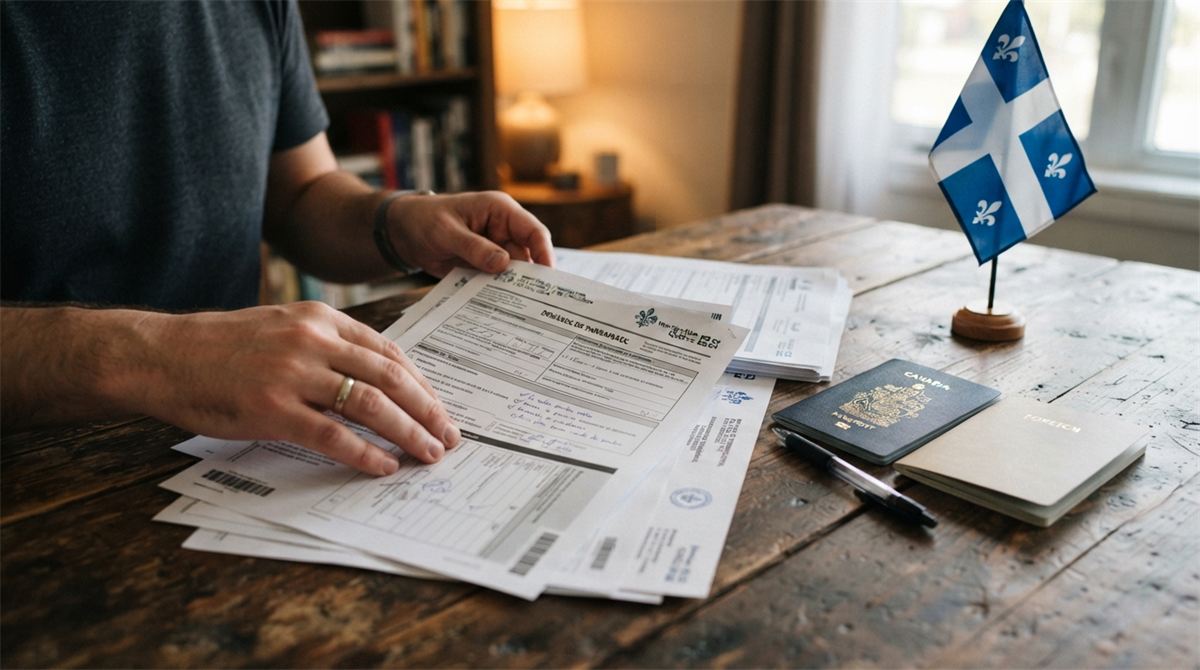
Understand invitations and whether the intake is open
An invitation and the current intake instructions control whether a prospective sponsor can submit an application. IRCC’s page lists the program’s status as paused: it is not currently accepting applications, and it will not accept new interest to sponsor forms or invite potential sponsors to apply until further notice. Applications already received continue to be processed.
- If you have not applied: there is no way to start a new sponsorship of parents or grandparents right now. Watch IRCC’s official page for any reopening, and do not rely on anyone who claims to have a way in.
- If your application is already with IRCC: the process continues, including the Quebec stage below.
- If you want your parents here sooner: the super visa is a temporary option that allows stays of up to five years at a time.
That distinction matters: ongoing processing is not an open intake. Do not submit an application without a required invitation or outside an announced intake; a previous intake’s deadline does not establish a current deadline.
While IRCC is not accepting new applications, use the waiting period to review sponsor eligibility, gather relevant income records and understand Quebec’s separate stage. Do not treat an old invitation, an interest-to-sponsor form or an application already in process as permission to submit a new file.
Assess Quebec’s financial requirement and evidence
Quebec’s financial assessment depends on the family size counted under its current rules. Identify the sponsor’s household members, the people being sponsored, any dependants and any existing undertakings or other family members that the official instructions say to include.
Then use Quebec’s current income table for the applicable family size and assessment period. The threshold is tied to those details, so use the official table rather than a general estimate or an amount from an older application guide.
Compare the income evidence Quebec requests for the relevant period with the applicable threshold. Follow the current instructions about which records to provide and whose income counts; a rough household-income calculation is not a substitute for the required proof of income.
A spouse or common-law partner may co-sign if the current rules allow it and that person meets the applicable conditions. Co-signing can affect the financial assessment, but it does not transfer or cancel the sponsor’s undertaking obligations.
Submit the Quebec undertaking when instructed
Submit the Quebec undertaking application only after IRCC confirms your eligibility and instructs you to proceed. Starting the Quebec application early can put the file out of sequence: an application received before its planned period is returned.
Did you know?
From July 2, 2026 to June 30, 2028, Quebec will receive at most 2,400 undertaking applications for a father, mother, grandfather, grandmother or other listed relative.
Submission dates follow a calendar based on the date of your IRCC eligibility letter, older letters first, and applications are sent by mail only. Source: Government of Québec, Rules governing the reception of applications
The Quebec fees, in effect since January 1, 2026, are $335 for the first person sponsored and $135 for each additional person. Check Quebec’s undertaking application page for your exact submission window before mailing anything.
The undertaking is a commitment to provide for the sponsored relatives’ basic needs for the period set by Quebec’s rules, and to repay any social assistance they receive during it. Use Quebec’s official instructions for the exact conditions, duration, forms and fees, since those details must be assessed under the rules that apply to your case. Our article on what a Quebec undertaking commits you to explains the obligations.
A co-signer may help meet the financial requirement where allowed, but the sponsor remains responsible for the undertaking.
If you move into or out of Quebec while the sponsorship is in process, or during the undertaking period, contact IRCC or Quebec’s immigration authority for instructions about your specific file.
Prepare the permanent-residence application carefully
Organize the sponsor’s forms and supporting records separately from the sponsored relatives’ forms and records. Use IRCC’s current checklist to identify what each person must submit, rather than treating the family file as one undifferentiated set of documents.
Before submitting, check that all required forms, supporting documents, signatures and translations are complete and consistent. Follow the current online portal instructions for uploading and submitting the application; missing steps can delay processing or lead to a returned file.
Sponsored relatives must also meet the application requirements that apply to them, which can include medical, background and other checks. Sponsor eligibility alone does not establish that a parent or grandparent qualifies for permanent residence; see our article on medical inadmissibility.
For timing, use IRCC’s processing-time tool and select the relevant application type. Processing time depends on the application and current processing conditions, so do not plan around a fixed completion date.
Consider temporary visits while permanent sponsorship is not available
A visitor visa and a super visa are temporary travel options for parents or grandparents. Neither replaces parent sponsorship or provides permanent residence, and each application must meet its own current eligibility requirements.
The super visa lets parents and grandparents visit for up to five years at a time, with multiple entries over up to ten years. It has its own conditions, including minimum income for you as the host, a letter of invitation and private medical insurance. Our super visa checklist walks through them.
Our visitor visa and super visa service helps assess whether a visitor visa, eTA or super visa is needed and assists with application preparation and supporting documents. It also offers help responding to an officer’s objections after a refusal, making it relevant to temporary applications rather than permanent-residence sponsorship.
For spouses and partners, sponsorship remains open, with its own Quebec cap: see our guide on sponsoring a spouse in Quebec.

Frequently asked questions
When will IRCC reopen the program?
IRCC has not announced a date. Only its official page can tell you when interest to sponsor forms or invitations resume.
Can my parents visit Canada while their permanent-residence application is being processed?
They can apply for temporary travel authorization while the permanent-residence file is in process, but the visit application is assessed separately. Their travel plans and supporting evidence must meet the requirements for the visitor visa or super visa they apply for.
Can my parents or grandparents include dependent children in their application?
Whether a child can be included depends on IRCC’s current definition of a dependent child and the family details in the application. Make sure the relatives disclose family members as required and follow the application guide for accompanying and non-accompanying dependants.
What happens if a sponsor’s income changes after the Quebec undertaking is approved?
A change in income does not itself rewrite the undertaking already signed. Contact Quebec’s immigration authority for guidance about the undertaking and any obligations that continue in your circumstances.
Does sponsoring a parent or grandparent make them a Canadian citizen?
No. Sponsorship is a route to apply for permanent residence, not citizenship. A parent or grandparent who becomes a permanent resident must later meet the separate requirements for Canadian citizenship.
See also: visitor visa and super visa, super visa checklist, sponsoring your spouse in Québec, immigration to Québec, complex cases.
Conclusion
Sponsoring parents and grandparents when you live in Quebec requires careful coordination between IRCC’s federal process and Quebec’s undertaking stage. Check whether an invitation and intake are available, assess both sets of requirements, and submit the Quebec undertaking only when IRCC directs you to proceed.
Use the current official instructions for eligibility, income evidence, fees, forms and processing times. While permanent sponsorship is not open, consider temporary travel options as separate applications rather than substitutes for family reunification through permanent residence.
Official sources
Official pages consulted on October 11, 2026:
- IRCC — Sponsor your parents and grandparents
- Québec — Rules governing the reception of applications
- Québec — Submitting an undertaking application to sponsor your father, mother or grandparent
More in this series
About this guide
Written for Visa Canada Rouge, a Montreal immigration consultancy led by Moadh Rahmaoui, Regulated Canadian Immigration Consultant (RCIC-IRB, licence R534941, listed on the public register of the College of Immigration and Citizenship Consultants).
This guide is general information, not legal advice. Immigration requirements, fees and processing times change often: check them on the official websites (canada.ca, quebec.ca) when you apply. No outcome can be guaranteed.
Every file is different.
This guide covers the general rules. To find out what applies to you, talk to a regulated consultant.