Studying in Quebec
CAQ or study permit in Quebec: which application comes first?
If your studies require a CAQ, you get it before applying for the federal study permit. Why the order matters, CAQ vs CSQ, renewals and families.
If you need a Québec Acceptance Certificate (CAQ) to study in Québec, apply for and obtain the CAQ before submitting your study permit application to the federal government. The CAQ and study permit are separate approvals, and each authority assesses a different part of your plans.

Start with the CAQ, then apply for your study permit
The usual order is to receive a letter of acceptance from your Québec institution, apply to Québec’s immigration ministry, MIFI, for temporary selection for studies, and then apply to Immigration, Refugees and Citizenship Canada (IRCC) for a study permit. The provincial step comes first because IRCC requires the CAQ when the applicant’s studies require one; in Québec, the CAQ takes the place of the provincial attestation letter.
The two documents serve different purposes. The CAQ records Québec’s selection of a student for temporary studies, while the study permit is the federal authorization to study in Canada.
For an overview of the provincial step, our CAQ for studies guide explains how it fits into the application sequence. Use the Government of Québec’s current CAQ instructions and IRCC’s study permit guidance to confirm the steps and documents that apply to you.
Before beginning, check which instructions apply to your program and circumstances. Application routes, required documents, financial requirements, fees, and processing information can change, so rely on the official government pages for current details rather than an older checklist.
Check whether your situation requires a CAQ
Not every student or course follows the same CAQ rules. A CAQ exemption may apply in some circumstances, so check the current Québec requirements for your program and personal situation before preparing an application. At the federal level, IRCC lists situations where no study permit is needed at all, such as a program of 6 months or less: see our study permit page.
Your admission information matters at both stages. Confirm the institution and program you plan to attend, and check that the institution is a designated learning institution (DLI) for federal study permit purposes. The details in your admission documents should match the information you provide to MIFI and IRCC.
A CAQ for studies is not the same as a Certificat de sélection du Québec (CSQ). A CAQ relates to temporary selection for studies, while a CSQ belongs to Québec’s permanent selection; one document does not replace the other.
Where you apply from and whether family members will accompany you can also affect the steps and supporting documents; review the official instructions for each person’s circumstances.
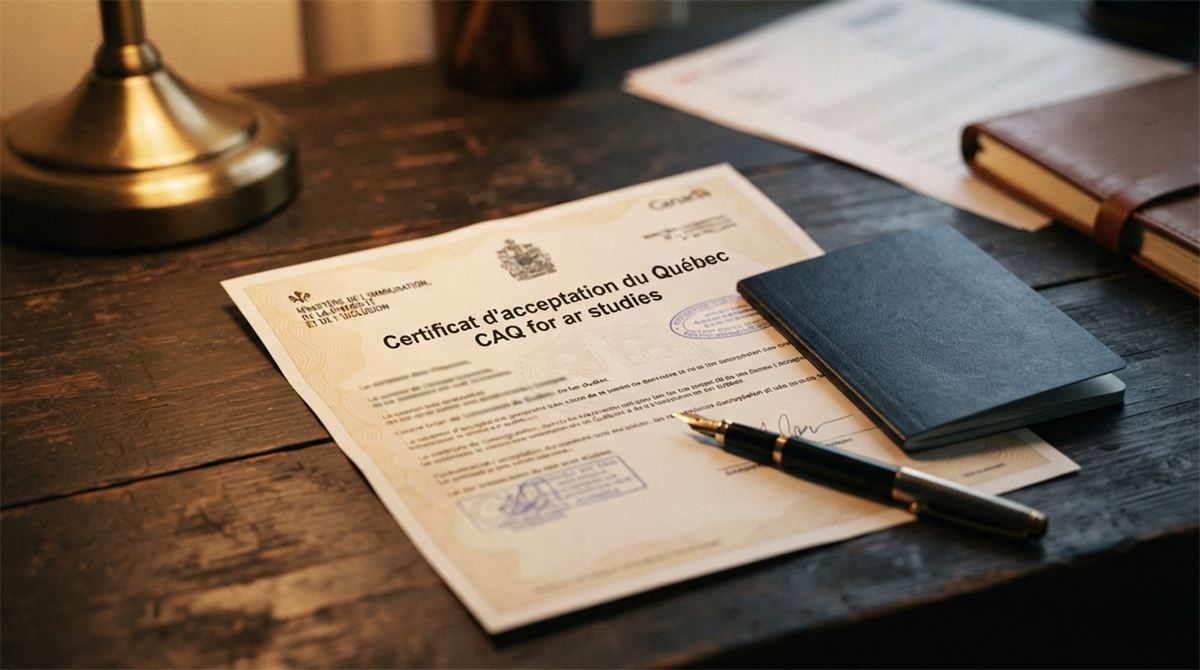
Prepare the CAQ application before submitting it
Start with the current MIFI instructions to identify the correct online process and the supporting documents required for your case. According to the Government of Québec, the fee ($135 in 2026 for an international student) is paid in Arrima within an hour of submitting, and you then have 15 days to upload your documents.
Gather the core information before opening the application. Depending on the current requirements and your circumstances, this may include:
- A valid passport or other required identity documents.
- Your institution’s letter of acceptance and details about the program.
- Tuition information and evidence addressing the applicable financial requirements.
- Any additional forms or supporting documents specified by MIFI.
Proof of financial capacity should explain how you will meet the requirements that apply to you. Check the current Québec instructions for the accepted evidence and required amounts, since financial figures can change. Our CAQ documents checklist goes into detail.
Compare the application with every supporting document before submitting it. Names, passport details, program information, and dates should be consistent; if a document contains an error, seek a corrected version or follow the ministry’s instructions for addressing it.
A CAQ application relies on information about your admission. Establish whether you have the letter of acceptance required for your case before starting, and follow MIFI’s current directions if your admission status has conditions or other special details.
After the CAQ, build and submit the federal study permit application
Once Québec issues the required CAQ, prepare the separate application to IRCC. Include the CAQ documentation as directed in the current federal instructions, along with the other records IRCC requires for your circumstances. The study permit fee is $150, plus $85 for biometrics in most cases.
IRCC assesses the federal application independently. Prepare the requested evidence of admission, financial capacity, identity, and any other requirements that apply to you; a CAQ does not itself authorize study in Canada.
A study permit is also different from an entry document. Depending on your citizenship and travel circumstances, you may need a visitor visa or an electronic travel authorization to travel to Canada, so check the official entry requirements for your situation separately.
Family members need their own assessment of the applicable rules. For example, a child’s age, school plans, and immigration circumstances can affect whether the child needs a study permit or other documents; consult IRCC’s guidance on minor children studying in Canada and the relevant Québec requirements.
Renewals and changes to your studies need a fresh sequence check
For an extension, check both your CAQ requirements and your study permit’s expiry date. If a CAQ is required, address the Québec renewal step before submitting the related federal study permit extension, which IRCC asks you to file at least 30 days before the permit expires. See renewing your CAQ and study permit.
Renewing a CAQ does not by itself extend your federal immigration status or authorize you to continue studying. Review IRCC’s current instructions for extending a study permit and its conditions for maintained status, which can depend on applying before your current permit expires and meeting the applicable rules.
A change in institution, program, or level of study can affect whether your existing documents still fit your plans. Before relying on an existing CAQ or study permit, check the current MIFI and IRCC requirements for the new study details.
If your status is approaching expiry, consult the official instructions promptly and get qualified advice about your individual circumstances. Do not rely on the CAQ renewal alone while deciding whether you can remain in Canada or continue studying.
Common mistakes and what to do if there is a delay
- Applying to IRCC too early: If your studies require a CAQ, obtain it before submitting the federal study permit application.
- Treating the documents as interchangeable: The CAQ and study permit are separate approvals, and you may need both.
- Assuming one rule applies to every student: Requirements can depend on your program, application location, dependants, and whether you are renewing documents.
- Starting with incomplete admission details: Confirm your institution and program information, then gather the documents listed in the current instructions.
- Relying on an old document after a change: Check the effect of a new institution, program, or level before using your existing CAQ and permit.
- Assuming a CAQ renewal preserves federal status: Check IRCC’s extension and maintained-status requirements separately.
Monitor the account or channel used for each application so you can see updates and requests from the responsible authority. If MIFI or IRCC asks for more documents, follow the specific submission instructions and deadline in that request.
If a decision is delayed and your program start is at risk, contact your institution to ask about deferral options. Check the relevant government page for current processing information, but do not plan around an estimated decision date.
The correct sequence and supporting evidence depend on the facts of your file, and government procedures can change. A consultation can help you organise the Québec and federal steps for your circumstances.

Frequently asked questions
Can I apply for a CAQ before receiving my letter of acceptance?
Usually, the CAQ process requires admission information from the Québec institution, so a student should expect to need the required letter before applying. If your admission is conditional or your institution has issued a different document, compare it with MIFI’s current document instructions.
How long does CAQ approval take, and where can I find current processing information?
Processing information can change and may depend on whether an application is complete, so use the current estimate published by the Government of Québec. IRCC processing information is separate and is available through its processing times tool.
Do accompanying children need their own CAQ or study permit?
There is no single answer for every child: requirements can depend on the child’s age, schooling plans, and immigration status. Check both Québec’s rules and IRCC’s instructions for the child rather than relying on the parent’s documents to cover them.
What should I do if Québec or IRCC asks me to provide additional documents?
Read the request carefully and submit the requested material through the channel named by the authority. If you cannot obtain a document in time, use the contact method in the request to explain the issue and ask what steps are available, and keep a copy of your response.
See also: assessment, Canada study permit: 2026 requirements, CAQ for studies, post-graduation work permit, PEQ.
Conclusion
For students who need a CAQ, the usual order is clear: secure admission, complete Québec’s temporary selection process, and then apply to IRCC for a study permit. Whether that order applies to you depends on whether a CAQ exemption applies, so verify the current rules for your own program and circumstances.
We can help you organise the steps. Book a consultation to discuss your next steps.
Official sources
Official pages consulted on October 11, 2026:
- Québec — Application for temporary selection for studies (French)
- IRCC — Extend your study permit: when to apply
More in this series
About this guide
Written for Visa Canada Rouge, a Montreal immigration consultancy led by Moadh Rahmaoui, Regulated Canadian Immigration Consultant (RCIC-IRB, licence R534941, listed on the public register of the College of Immigration and Citizenship Consultants).
This guide is general information, not legal advice. Immigration requirements, fees and processing times change often: check them on the official websites (canada.ca, quebec.ca) when you apply. No outcome can be guaranteed.
Every file is different.
This guide covers the general rules. To find out what applies to you, talk to a regulated consultant.