Visiting Canada · Main guide
Canada visitor visa documents: build a clear, consistent application
Which documents support a Canadian visitor visa application: purpose of the trip, funds, ties to your home country, and how to make the whole file agree.
Preparing Canada visitor visa documents is not just a matter of collecting papers: each document should support why you are travelling, how the visit will be paid for, and why you will leave Canada when your authorized stay ends. The right checklist depends on your citizenship, travel document, travel method, and personal circumstances.

Key takeaways
- Check which authorization applies first. A TRV, an eTA, and a visitor record serve different purposes, so use IRCC’s official tool before assembling a checklist.
- Use your own application checklist. Required forms and documents can vary; suggested supporting evidence is not automatically mandatory for every applicant.
- Make the visit easy to understand. Your travel purpose, itinerary, accommodation, funding, and planned departure should fit together.
- Explain the money. Show who will pay which costs and provide evidence that supports the stated funding arrangement.
- Show your circumstances outside Canada. Work, studies, business responsibilities, family commitments, and travel history may help explain your plans to return.
- Review the whole file before submitting. Check that forms and supporting records are consistent, readable, complete, and translated as IRCC requires.
First confirm whether you need a TRV, an eTA or a visitor record
A temporary resident visa (TRV), often called a visitor visa, is a travel document required by many foreign nationals who want to travel to Canada. An electronic travel authorization (eTA) is generally for visa-exempt foreign nationals flying to Canada, subject to eligibility and exceptions.
A visitor record is different: it can set or extend a visitor’s authorized stay from inside Canada. It is not a substitute for a TRV or eTA when travelling to Canada, so a person who leaves and wants to return must also have the required travel authorization. See our guide to the visitor record.
Use IRCC’s official tool to check whether you need a visa or eTA. Check using your citizenship, travel document, and travel method, then follow the instructions for the route that applies to you.
There is no universal Canada visitor visa document checklist for every traveller. Rules and application instructions change, so consult canada.ca for current fees, processing times, and other figures.
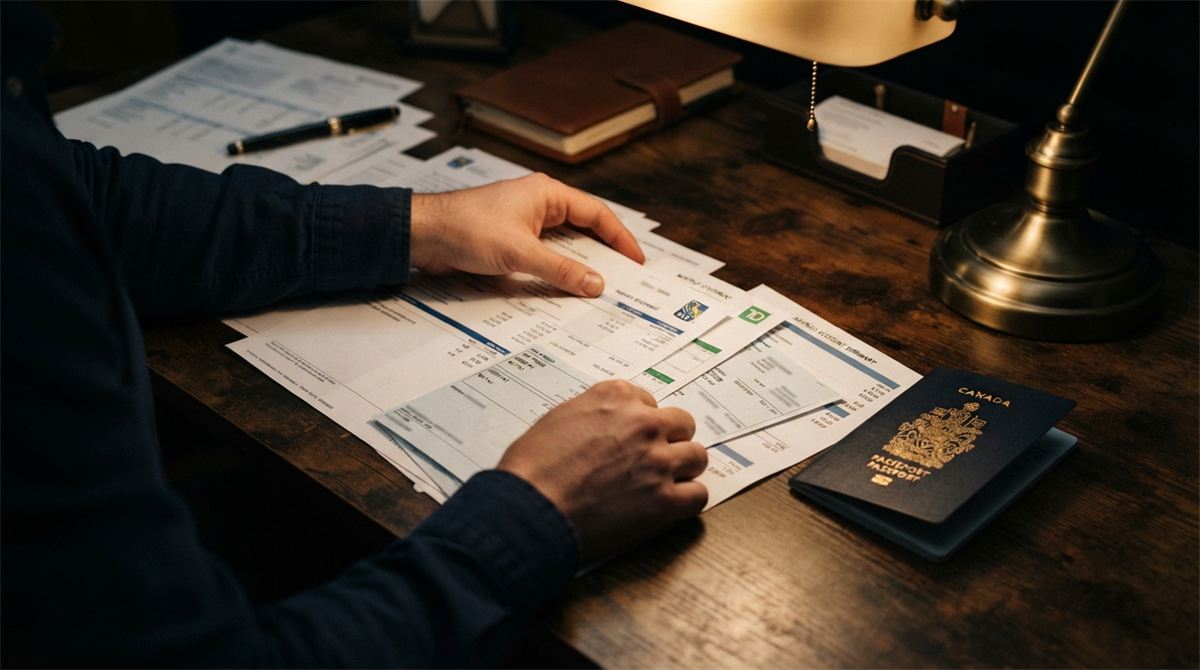
Use your personalized checklist to gather identity and travel-history evidence
Start with the current application forms and document checklist for your circumstances. For an online application, answer IRCC’s questions carefully and use the personalized document checklist generated for you; it identifies what IRCC asks you to provide. The forms and documents depend on that checklist and IRCC’s instructions.
Prepare a valid passport and any national identity documents requested or relevant to your application. Make sure the name, date of birth, passport details, and other identity information match across the forms and supporting records.
Travel-history evidence can help explain previous visits and your record of complying with immigration conditions. Include prior visas, entry or exit stamps, or other travel records when requested or when they help clarify your circumstances; explain any relevant gaps or changes plainly.
Follow the directions for your chosen online or paper application. Do not reuse an outdated form or apply instructions meant for a different process, and keep required documents distinct from optional evidence that simply helps explain your case.
For online submissions, check that each scan is complete, legible, and saved in the format and size allowed by the application instructions. If a document is not in English or French, provide the original and the translation in the format IRCC requires; use a certified translation or other translator documentation when the instructions call for it.
For a TRV, the main application form is the Application for a Temporary Resident Visa (Visitor Visa). In an online application, complete the form using the same identity, travel, and funding details as your evidence; upload each requested item in the checklist category, review the whole application, then sign and submit it with the applicable fee. Keep the submission confirmation and check your account for messages. Biometrics are required only when IRCC instructs you to provide them: follow the instruction letter and its steps, or the exemption information provided by IRCC. Our guide on who needs to give biometrics explains the rules.
Connect the visit purpose to a realistic itinerary and invitation
Explain why you are travelling, when you plan to arrive and leave, where you intend to go, and where you expect to stay. A practical travel itinerary gives the officer a clear account of the visit, and its dates and details should agree with your forms, invitation, accommodation plans, and funding explanation.
If you are visiting family or friends, a letter of invitation can explain the relationship, reason for the visit, planned length of stay, and arrangements in Canada. Support it with evidence of the relationship and relevant information about the host, such as their address and circumstances in Canada. Our guide to the invitation letter covers what it should contain.
An invitation supports your explanation, but it does not replace your own evidence about your finances, situation, or plans to leave Canada. If a host or another person will pay, state which costs they will cover and provide documents that support that role.
Our visitor visa and super visa page focuses on connecting the trip purpose, supporting documents, and plans to leave Canada. The service checks whether a visitor needs a visa, an eTA, or a super visa, helps build a consistent file, prepares invitation and host documents, and addresses concerns after a refusal.
Explain the trip budget and where the money will come from
There is no single bank balance that explains every visitor visa application. The officer needs to understand whether the proposed visit is financially plausible for its length and plans, and where the money to pay for it will come from.
Set out the main expected costs, such as transportation, accommodation, meals, and activities. Connect the estimate to the itinerary: a short stay with a host has a different cost picture from a longer visit with paid accommodation and several destinations.
State whether you, your host, or another sponsor will cover each major expense. Provide proof of financial support that fits the explanation, such as relevant account records or evidence of income, and make clear whose funds are available for the trip.
Explain unusual deposits or other financial details that might otherwise look inconsistent with your stated income or savings. A large balance without context may leave unanswered questions, while a clear explanation connects the funds to their source and intended use.
Do not rely on an unsupported fixed funds threshold. For current official information, consult canada.ca; present a budget that matches your particular visit because requirements and instructions can change.
To build a realistic estimate, price the costs in your proposed itinerary and note which ones you or a host will pay. Compare the total with funds actually available after ordinary obligations; if a sponsor contributes, show the contribution and evidence they can provide it. Statements covering several recent months may be enough in some cases, but no statement period is automatically sufficient. Records are more useful when they show income, balances, and regular transactions; explain unusual deposits and make sure the evidence supports the budget. The amount and records needed depend on the visit, funding source, and your circumstances.
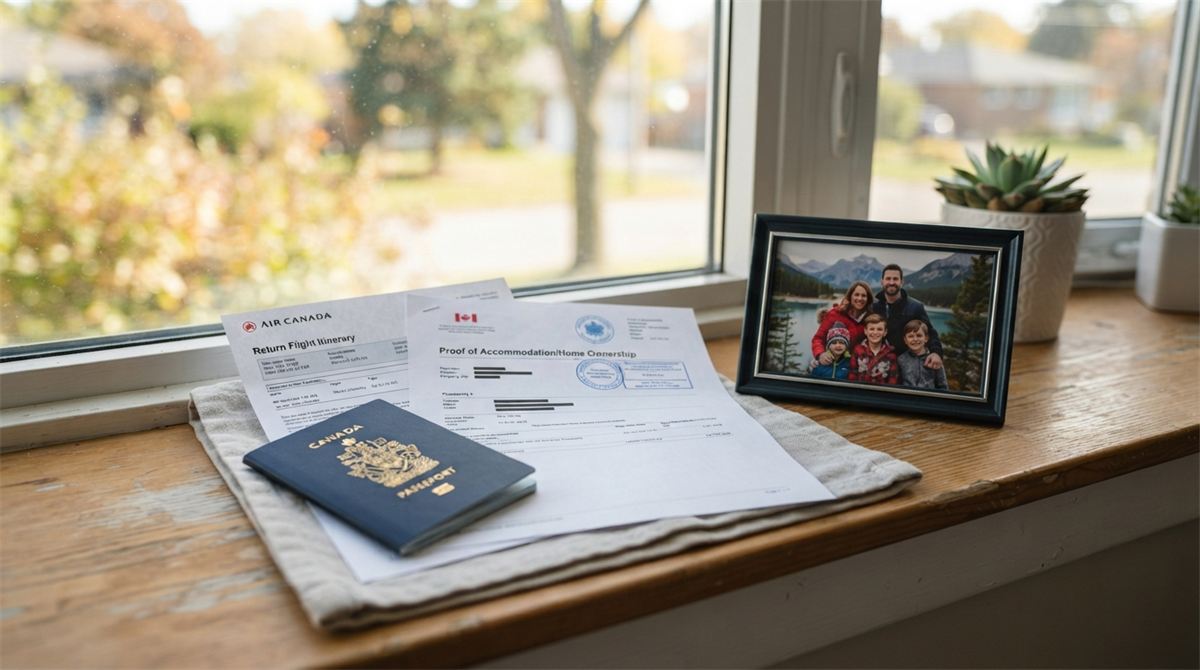
Show the ties and circumstances that support leaving Canada
Officers must be satisfied that you will leave Canada at the end of your authorized stay. Present your planned departure alongside evidence of meaningful commitments outside Canada, so the application explains both the visit and what you will return to.
The right proof of ties to your home country depends on your circumstances. An employee might provide an employment letter that confirms their role and approved leave; a student might show current enrolment and explain when studies resume.
A self-employed applicant can describe ongoing business responsibilities and provide records that relate to those commitments. Family responsibilities, professional obligations, or other established ties may also help when supported by evidence that fits the applicant’s situation.
Property ownership can be relevant, but it does not explain a person’s entire situation by itself. Pair each document with a clear account of what it shows, and make the planned return date consistent with the end of leave, studies, or other commitments.
Travel history should fit the same account. If your work, family situation, finances, or travel plans have changed since a previous application or trip, explain the change directly rather than leaving the officer to infer its meaning.
Check the whole file for consistency before submitting
Before submitting, compare names, dates, trip length, itinerary, accommodation, funding, and explanations across the forms and supporting documents. Correct discrepancies or explain them; do not expect the officer to guess which version is accurate.
Use your personalized checklist to distinguish required documents from optional evidence. A generic list found online may describe documents that do not apply to your application, or omit items required for your route.
Check every file for readability and completeness, confirm that translations follow IRCC’s instructions, and make sure the forms and submission steps match your chosen application method. After you submit, monitor your account and follow any requests, including instructions about biometrics or additional documents if IRCC sends them.
Common mistakes include using an outdated form, treating every suggested document as mandatory, relying on a fixed funds amount without explaining the budget, and submitting conflicting dates or unclear scans. An application for a visitor visa to Canada should present one coherent story from the first form to the last supporting document.
If IRCC has refused an application, address the specific concerns in the decision rather than resubmitting the same unexplained evidence. Our guide to visa refusal explains why reviewing the refusal reasons matters before preparing another application, and reconsideration or a new application compares the options.
Frequently asked questions
Can I apply for a visitor visa for my parents, and when might a super visa be an alternative?
Yes, you can help your parents prepare their visitor visa applications, but each parent’s circumstances and eligibility need to be considered individually. For eligible parents and grandparents, a super visa may suit a longer family visit; the host must meet current conditions. See our super visa checklist.
Can I submit a travel itinerary without booking my flights?
Yes, an itinerary can describe proposed travel without showing purchased flights. Avoid making non-refundable travel commitments before you have the required authorization, and check IRCC’s current instructions for any travel evidence requested in your application.
Does each child travelling to Canada need a separate visitor visa application?
Each child who needs a visitor visa needs a separate application; a parent may prepare the applications together as a family, but the child is still an individual applicant. IRCC considers children under the age of 18 to be minors. Depending on the travel arrangements, custody, consent, or guardianship documents may also help explain who is accompanying the child and who has authority to make travel decisions.
What should I consider if my passport may expire during my planned visit?
Where possible, renew a passport that may expire during the proposed trip before you apply or travel, because passport expiry can limit the period for which travel documents are issued. If you already hold a visa or are renewing after applying, check IRCC’s current instructions and confirm which passport documents your carrier and destination requirements accept.
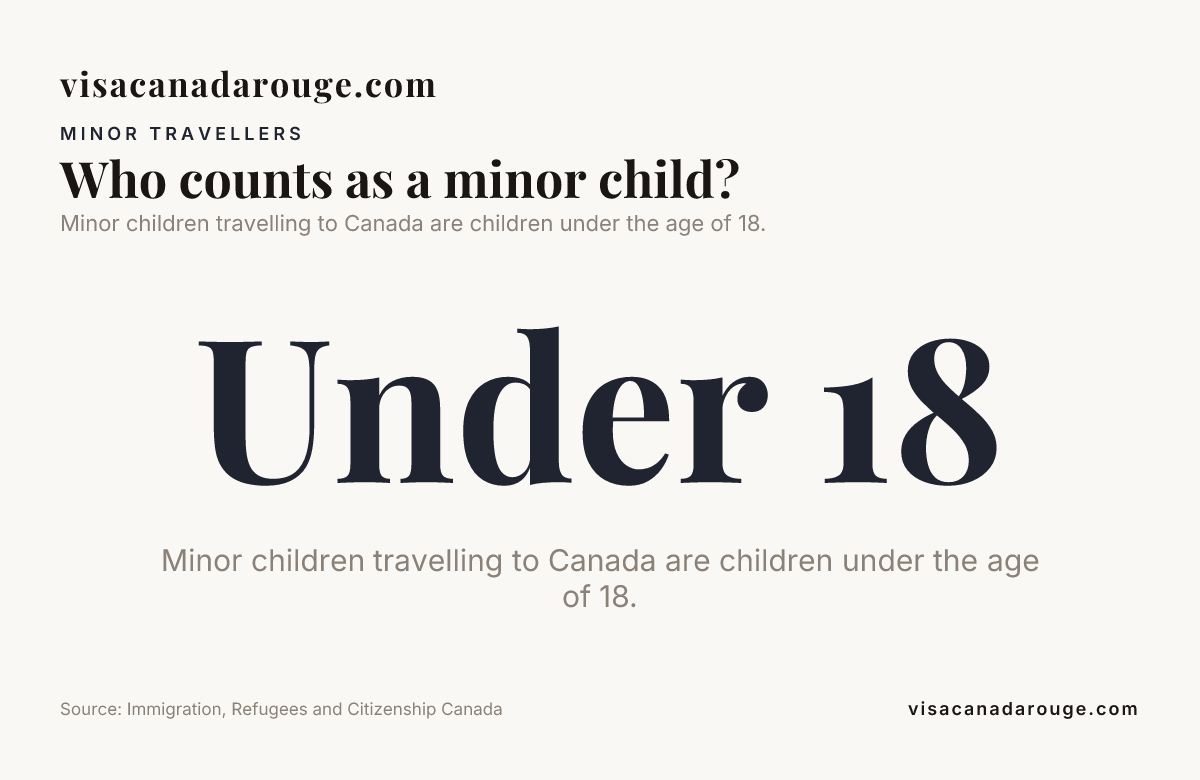
Children under the age of 18 are considered minors in Canada. Source: IRCC, Minor children travelling to Canada
See also: visitor visa and super visa, visa refusal, study permit, work permits, sponsorship in Québec, complex cases.
Conclusion
Strong Canada visitor visa documents support a clear purpose, a realistic budget, and a credible plan to leave Canada at the end of the authorized stay. Because requirements and figures change, check canada.ca for current instructions after building the application around your personalized checklist and making sure the evidence agrees.
We invite you to book a consultation for help preparing an application, or describe your situation so we can understand what guidance may fit. No one can assure a particular application outcome.
Official sources
Official pages consulted on October 11, 2026:
- IRCC — Find out if you need a visa or an eTA
- IRCC — Visitor visa: after you apply
- IRCC — Super visa for parents and grandparents
More in this series
- Biometrics for a Canadian application: who needs them, what they cost, how long they last
- Writing an invitation letter for a Canadian visitor visa: what to include, with a template
- Super visa for your parents: a checklist for the host in Canada
- Visitor record: how to extend your stay as a visitor in Canada
- Canadian visitor visa refused: reconsideration request, new application or judicial review?
About this guide
Written for Visa Canada Rouge, a Montreal immigration consultancy led by Moadh Rahmaoui, Regulated Canadian Immigration Consultant (RCIC-IRB, licence R534941, listed on the public register of the College of Immigration and Citizenship Consultants).
This guide is general information, not legal advice. Immigration requirements, fees and processing times change often: check them on the official websites (canada.ca, quebec.ca) when you apply. No outcome can be guaranteed.
Every file is different.
This guide covers the general rules. To find out what applies to you, talk to a regulated consultant.